Showing posts with label Death. Show all posts

Thursday, 7 February 2019

‌‌The York Dead Good Festival

‌‌10-19 May 2019
Various locations in York

The York Dead Good Festival is a coordinated by the Death and Culture Network (DaCNet) and St Leonards Hospice, York during Dying Awareness week 10-19 May 2019. Lots of free public events will be running during the festival ranging from theatrical performances to will writing to thinking about death in science fiction and pet grief.

When it comes to conversations about death, it always seems too early until it's too late. As a society, we're not particularly good at talking about these things. The festival aims to encourage people to be more open about dying, death and bereavement.

The festival will encourage people to express themselves in different ways, whilst giving advice and support on a number of practical matters. Join us for events throughout York including performances, informative talks, crafts, discussions and more, many of which are free.


Programme to follow
www.yorksdeadgoodfestival.co.uk  
https://www.york.ac.uk/sociology/research/death-and-culture/ 


‌‌

Tuesday, 17 July 2018

Death & Culture II Conference

Thursday 6 September 2018, 9.00am to 7 September 2018

Speaker(s): Professor Dina Khapaeva Professor Dorthe Refslund Christensen Professor Joanna Bourke Professor Stephen Regan 
This biennial conference focuses on the impact of mortality on culture, and the ways in which the very fact of death has shaped human behaviour, evidenced through thought, action, production and expression. The conference, in its second iteration, seeks to continue engaging with the study of mortality as an academic enterprise, supported by evidence and framed by theoretical engagement. This truly interdisciplinary event brings together death scholars, including postgraduates, as well as those who might not consider themselves death scholars whose work that overlaps with death and the dead.
The conference will cover topics such as:
  • Governance of mortality
  • Death in the popular imagination
  • Death and the digital realm
  • Work in the death industry
  • Mass death in the age of individualism
  • Artistic death
Location: University of York, Alcuin B Block
Registration: CLOSED

Thursday, 11 January 2018

Death & Culture II Conference (Registration Open)


6-7 September 2018, 9.00am

How does culture understand death?

This biennial conference focuses on the impact of mortality on culture, and the ways in which the very fact of death has shaped human behaviour, evidenced through thought, action, production and expression. The conference, in its second iteration, seeks to continue engaging with the study of mortality as an academic enterprise, supported by evidence and framed by theoretical engagement. This truly interdisciplinary event brings together death scholars, including postgraduates, as well as those who might not consider themselves death scholars whose work that overlaps with death and the dead.
We welcome contributions on topics such as but not limited to:
  • Governance of mortality
  • Death in the popular imagination
  • Death and the digital realm
  • Work in the death industry
  • Mass death in the age of individualism
  • Artistic death

Keynote speakers:

  • Professor Dina Khapaeva
  • Professor Dorthe Refslund Christensen
  • Professor Joanna Bourke
  • Professor Stephen Regan 
This event will launch a new associated book series, Emerald Studies in Death and Culture
Location: University of York, Ron Cooke Hub
Admission: Registration OPEN

Tuesday, 4 October 2016

Bodycount Rising on Radio 4

Ruth Penfold-Mounce is speaking on a new Radio 4 programme on thursday 6th October at 11.30am. The programme entitled 'Bodycount Rising' is exploring the rise in female dead bodies displayed on television. Ruth discusses the rise in violence against dead women and challenges the assumption that this is acceptable entertainment. You can catch the programme on iplayer from friday: http://www.bbc.co.uk/programmes/p02pc9qx

The Fall

Wednesday, 24 August 2016

Death and Culture Comes to York

The Death and Culture Conference is next week (1st-3rd Sept).

The badges are made, the programme is being printed and the conference meals have been chosen and ordered.

Its still not too late to register if you want to come.

Tuesday, 26 April 2016

Before I Die: A festival for the living about dying

Doctoral Student Anais Duong-Pedica writes about the Before I Die festival:

'This year will mark the 7th national Dying Matters Awareness Week.  This week of events, initially founded by the National Council for Palliative Care, is an opportunity to initiate discussions about death, dying and bereavement at a local and national level. The events put in place aim to change public knowledge, attitudes and behaviours towards death and dying as well as making good deaths more accessible to people.
 Image result for Dying Matters Awareness Week
Dying Matter Awareness Week will take place May 9th-15th in England and Wales. For this occasion, the University of York will contribute to the conversation with its own weekend of events: The Before I Die Festival. The festival takes place on the weekend of May 7th-8th and gathers a dozen of events at York, which focus on death. A few members of the department will be contributing to these discussions. Our very own Ruth Penfold-Mounce will be talking about Celebrity Death and Public Grieving – a topic particularly relevant this year since the recent deaths of Alan Rickman, David Bowie, and more recently, Prince. Meanwhile Celia Kitzinger and Sue Wilkinson will be leading a session on the end of life planning tool - Advance Decisions and  I will be holding a discussion on Dying and Grieving in the Age of Social Media.

Image result for anais duong pedica
Anais Duong-Pedica
In this one-hour session, I wish to start a dialogue on what it means to die and grieve online today. This will be a space where personal experiences will be welcomed and encouraged. We will be exploring different aspects of death and grief, specifically on social media, from the perspective of the individual who is dying/dies, but also from the perspective of close friends, family and acquaintances. I hope to raise awareness of crucial discussions that people ought to have about their death or the death of loved ones and social media: What would I like my account(s) to become? What types of grieving am I comfortable with people doing online? How do social media accounts remind us of the dead and how does that impact our grieving? How do we navigate discomfort with the way other people grieve online? And even, how do we experience grieving for people we only know online?

Not only does the Before I Die Festival play a major role in creating conversations around issues related to death, dying and bereavement and normalising good deaths, it also locates itself within an environment of growing interest for death research. The University of York is home to the Centre for Modern’s Studies’ Death Network and Cemetery Research Group led by Julie Rugg (Department of Social Policy and Social Work). Ruth Penfold-Mounce, Jack Denham and myself (Department of Sociology) also organised a well-attended symposium on Marginal Death Research last October and Ruth Penfold-Mounce, Jack Denham and Julie Rugg will be holding the three-day Death and Culture conference in September this year.  

You can support Dying Matters Awareness Week by sharing the programme on Twitter, visiting the Dying Matters website, and by going along to some of the events.  We also encourage everyone to have “the Big Conversation” – talk with friends and family about your own death and the importance of preparing for it.'


Wednesday, 20 January 2016

Free workshop on David Bowie's Death

You are invited by Centre for Women's Studies and Sociology to an afternoon of discussion on David Bowie, focusing on personal & media reactions to his death.

David Bowie 'Lazarus' 
Is it a ‘Diana moment’, a distraction from war, floods, January, Cameron?

Is Bowie a genius, recognised in his own time? Is he someone who,as Grayson Perry commented, “sucked up the zeitgeist and gave it to us kids to feast on”.
(11 January, Guardian).

How did his music move us, his style affect us? Which Bowie is your Bowie?

How can we approach seventies ‘baby groupies’ and assess his flirtation with fascism?

Please send ideas for 10 minute discussion-starters by 20th January to:  ann.kaloski-naylor@york.ac.uk & ruth.penfold-mounce@york.ac.uk 

Date: 3rd February, 1.30-4, VX330, 3rd floor, Grimston House (by Market Square). FREE EVENT, tea & coffee from 1.15.

Friday, 8 January 2016

Death and Culture Conference - Book your place

The Death and Culture Conference 1st-3rd Sept 2016 website now has a page where you can book your place.

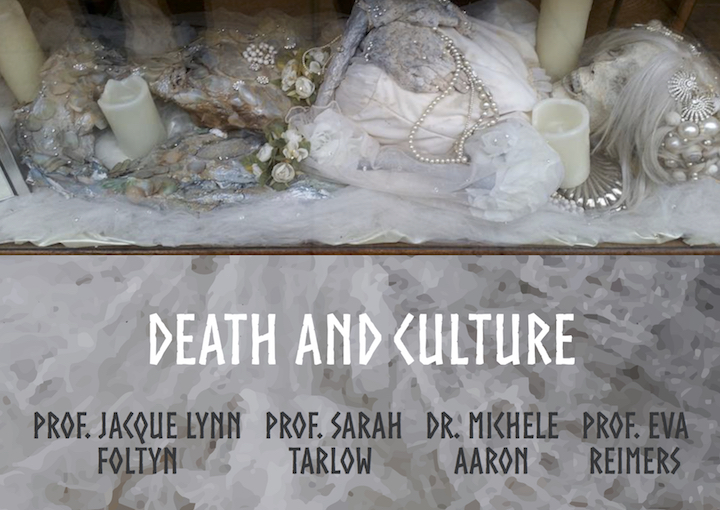
We have four exciting keynotes: Prof Jacque Lynn Foltyn (Sociologist), Prof Sarah Tarlow (Archeology), Dr Michelle Aaron (Film Studies) and Prof Eva Reimers (Communication Studies)

Please follow the link for more information: www.york.ac.uk/death-and-culture

Tuesday, 5 January 2016

4th Key Note Confirmed for Death and Culture Conference

Eva ReimersEva Reimers has confirmed that she will be our 4th key note speaker at the Death and Culture Conference in Sept 2016 here in York.

Eva does exciting work on communicative perspectives on death, loss, bereavement and grief and has studied Swedish media representations of disaster and death.

For more information see our website: Death and Culture Conference 

Wednesday, 9 December 2015

Death and Culture Conference 1st-3rd Sept 2016

Ruth Penfold-Mounce (Sociology) along with Jack Denham (Sociology), Julie Rugg (Social Policy) and Ben Poore (TFTV) are running a three day international conference at York on 'Death and Culture'

Call for Papers:
How can we, as academics, understand cultural responses to mortality?
Is every response to death – over time and over place - uniquely personal or essentially the same?

This conference focusses on the impact of mortality on culture, and the ways in which the very fact of death has shaped human behaviour, evidenced through thought, action, production and expression. The conference seeks to re-engage with the study of mortality as an academic enterprise, supported by evidence and framed by theoretical engagement. No discipline is excluded and we are encouraging researchers including postgraduates to contribute who might not consider themselves death scholars, with work that overlaps with death and the dead.
We welcome contributions on topics such as but not limited to:

·         Death, film and television
·         Fame and death
·         Historical death
·         The dead in place and space
·         Law, death and the dead
·         Art and death
        Commonplace death

Confirmed keynotes include Prof Jacque Lynn Foltyn (National University, California), Prof Sarah Tarlow (University of Leicester) and Dr Michelle Aaron (University of Birmingham)

For more details visit: york.ac.uk/death-and-culture

Please note more information will be added soon regarding conference details.

A review of the Marginal Death Symposium December 2015

The Marginal Death Research: Doing Edgework symposium on Wed 2nd December was a dynamic and exciting day with stimulting papers and discussion.


Follow the link for a review of the day: Marginal Death

Tuesday, 3 November 2015

Celebrity Death: A Good Career Move?

Ruth Penfold-Mounce has published a piece in The Conversation over the Halloween Weekend. Drawing on her interest in celebrity and death she suggests that a celebrity career is not necessarily over when they die. For some celebrities being dead is the best career move they have made! Not just for Halloween reflects on Michael Jackson and how Robin Williams has successfully controlled and prevented an 'afterlife' for himself for decades to come the article addresses the sheer scale of celebrities careers in death.

Tuesday, 28 April 2015

The Krays, the BBC's Hairy Bikers and Corpses

Ruth Penfold-Mounce has been interviewed by the University Research Online Site about her recent filming experiences with the BBC's Hairy Bikers, her research into celebrity culture and crime and also death, dying and corpses.
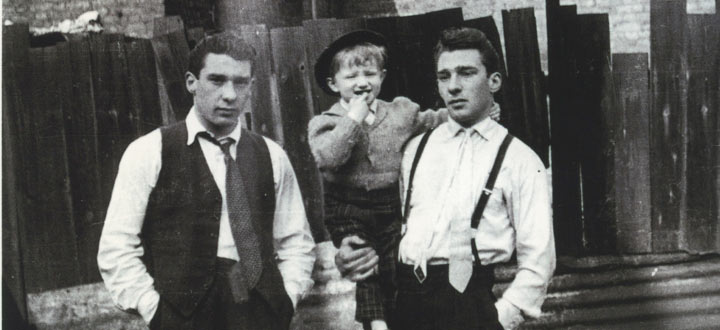
Ronnie (left) and Reggie Kray with nephew Gary (centre) in Bethnal Green, London featured in the book The Krays From the Cradle to the Grave.  PHOTOGRAPH: Barcroft Media

Wednesday, 22 April 2015

Popular Culture, Forensics and Corpses

Ruth Penfold-Mounce has a new article 'Corpses, popular culture, and forensic science: public obsession with death' that has been released online in Mortality. Mortality is currently her favourite journal and not just because they have published her work but because it provides an interdisciplinary approach to death studies allowing for and and encouraging cultural explorations of this field.

Image result for CSI forensicsThe article considers how forensic science portrayals in popular culture fuel public obsession with death and corpses. It suggests that watching the dead is societally acceptable when seen through forensic science which provides a softening lens. It is this softening lens and popular culture representation that is leading to a normalisation of consuming the dead by the public.

Thursday, 16 October 2014

Before I Die:Video of the Festival of Death and Dying

Festival of Death and Dying - Before I GoBack in May this year, Celia Kitzinger arranged a week long Festival of Death and Dying. This event included death cafes, panels of experts speaking about death and dying, poetry and plays, to name but a few of the events.


Filming throughout the festival took place and the end result is

Before I die

It provides a taste of the events that took place and the issues that were discussed


Narratives of Hope: Science, Theology and Environmental Public Policy (SATSU)

Date and time: Wednesday 10 April 2019, 1pm to 2pm Location: W/306, Wentworth College, Campus West, University of York ( Map ) Audie...