Showing posts with label gender. Show all posts

Wednesday, 21 February 2018

PhD 2018 Conference - Empowered Bodies


REGISTRATION OPEN

Call for Papers

We are pleased to announce our Postgraduate Conference for students and researchers interested in the role of the body in social sciences and the concept of embodiment as a source of critical reflection in diverse disciplines. We invite abstracts that deal with embodiment in any thematic or methodological way, from a diverse range of disciplines like Gender Studies, Politics, Philosophy, Geography, Arts, Health, Media, STS, Social Policy and any other approach.

Topics include (but are not limited to):
  • Power, gender and identity
  • Politics of the body
  • Body transformations
  • Health, Food and Practices
  • Disabilities, agency and control
  • Affect and Emotions
  • Technology, humans and cyborgs
  • Body as Mediation
  • Arts, performance and creation
  • Cultural representations of the body
  • Measurement, tracking and datafication of the self
Masters and PhD Students are particularly encouraged to submit an abstract, as well as other postgraduate students in early stages of analysis, as this is an excellent chance to present your work in a constructive and supportive environment. We also welcome works in progress by any other level of early career researchers.

If you are interested in presenting a paper, please submit an abstract of up to 300 words to empowered-bodies@york.ac.uk by Friday, 14 April 2018 at 5:00 pm.

We also welcome any other form of presentation or performance such music, dance, video, etc. as long as it can be fitted within the program. Please send us your idea with your abstract and try to be as specific as possible of any technical or room requirements and the kind of activity that you would like to present.

A limited number of travel bursaries will be available.

Further information will be released by the end of March 2018. Please direct all enquires to empowered-bodies@york.ac.uk

Thursday, 11 January 2018

Imagining the History of the Future: Unsettling Scientific Stories (3 Days) Registration Open

Tuesday 27-29 March 2018, 9.00 am - 5:00 pm

Speakers:Professor Sherryl Vint (University of California, Riverside, USA)
Professor Charlotte Sleigh (University of Kent, UK)

The future just isn’t what it used to be… not least because people keep changing it. Recent years have seen a significant growth of academic and public interest in the role of the sciences in creating and sustaining both imagined and enacted futures. Technological innovations and emergent theoretical paradigms gel and jolt against abiding ecological, social, medical or economic concerns: researchers, novelists, cartoonists, civil servants, business leaders and politicians assess and estimate the costs of planning for or mitigating likely consequences. The trouble is that thinking about the future is a matter of perspective: where you decide to stand constrains what you can see.

With confirmed plenary speakers Professor Sherryl Vint (University of California, Riverside, USA) and Professor Charlotte Sleigh (University of Kent, UK) this three-day conference will bring together scholars, practitioners, and activists to explore ways in which different visions of the future and its history can be brought into productive dialogue.

Focused on the long technological 20th Century (roughly, 1887-2007) and looking particularly at the intersections between fictional/narrative constructions of the future, expert knowledge, and institutional policy development, the themes of the conference will include but are not limited to:
  • The relationship between lay and expert futures, especially futures produced by communities marginalised in public dialogue by ethnicity, gender, sexuality, species or political orientation
  • How have different forms of fiction (novels, films, games, comics) created different visions of what’s to come? How have their audiences responded to and shaped them?
  • The role of counterfactuals/alternate histories, as well as factional accounts and popular science: how have different forms of writing positioned the future?
  • What’s the relationship between past and present scenario planning in government or commerce? How have they fed into wider cultural conceptions of impending developments?
  • Disciplinary influences: how have different academic disciplines – sciences, humanities, arts, social sciences – fed into developing futures? Has this changed over time?
  • The role of futures past: how can we recover them, and what do they tell us about futures present? What are the forgotten or marginalised sites of future-making
  • How have different themes – time, the apocalypse, the individual, among others – changed over the last century of future-thinking?
Website: http://unsettlingscientificstories.co.uk/imagined-futuresTwitter: @UnSetSciStories #ImaginedFutures

Registration: http://store.york.ac.uk/product-catalogue/sociology/imagining-the-history-of-the-future-unsettling-scientific-stories

Location: Ron Cooke Hub, University of York
Registration: NOW OPEN
Email: unsettling-science@york.ac.uk

Wednesday, 8 February 2017

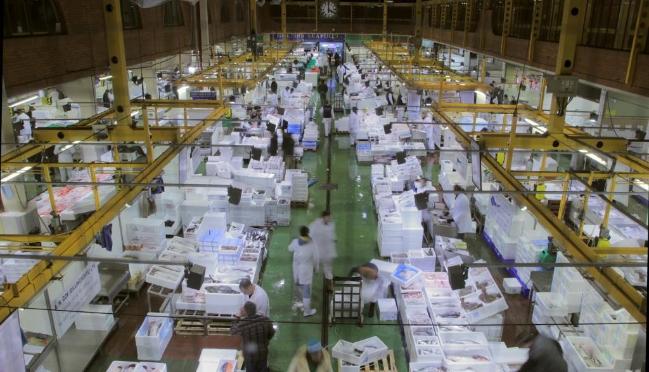
CURB Seminar: Grasping the Everyday Rhythms and Atmospheres of a Fish Market

Wednesday 22 February 2017, 3.00pm to 4pm

Speaker: Dr Dawn Lyon, University of Kent
This presentation takes two fish markets as sites to explore urban social life. Inspired by Henri Lefebvre’s Rhythmanalysis (2004) and the embodied experience of moving through and sensing market space, I consider the value of using different audio-visual approaches as a mode of documentation and a medium of inquiry to analyse rhythm and atmosphere. The first example, a study of Billingsgate, London’s wholesale fish market, takes the form of an audio-visual montage of the market hall through the night based on time-lapse photography and sound recordings (with Kevin Reynolds, 2013). The resultant ‘film’ renders the elusive quality of the market and the work that takes place within it to make it happen, and allows viewers to perceive rhythm. The second example is a short ethnographic film about the everyday life of a wholesale fish market in Sardinia, Italy. The Passage of Fish (with Francesco Bachis, Felice Tiragallo and Antonio Pusceddu, 2015) shows sellers’ and buyers’ techniques of communication, evaluation, exchange, and care, and how social relations are animated by the market space, the material dimensions of market life and the alluring presence of the fish itself. Both films immerse the viewer in the material, sensory and affective atmosphere of the market. This talk critically considers the documentation, evocation and analysis of time and space in these ways, and the extent to which these approaches provide a means of showing social life and an analytic tool for making sense of it.  

Biography
Dawn Lyon is Senior Lecturer in Sociology in the School of Social Policy, Sociology and Social Research, University of Kent where she has worked since 2006. She was previously employed at the University of Essex, and at the European University Institute where she completed her PhD. She has published in the fields of the sociology of work, gender, migration, community, young people’s imagined futures, and visual and sensory sociology. Her current research interests include skill, value, the organisation and rhythms of work, affective relations across the human and non-human, and sensory and embodied labour in the fish industry. She is currently writing a short methods book on rhythmanalysis in Bloomsbury’s What is…? series. @dawnlyon65
Donna Lyon (large)
Location: W/222 Wentworth College
Admission: FREE - Eventbrite ticket

Wednesday, 12 October 2016

Sexual Violence on Television

Following her appearance on Radio 4 'Body Count Rising' Ruth Penfold-Mounce has been featured on Minster FM relating to the 'crime porn' on television. Ruth spoke about the rise in graphic violence towards women (and men) on television and how often the visual violence could be removed and still leave a compelling story and characters.

dr ruth penfold mounce 1

Follow the link to read, see and hear more: Crime Porn

Tuesday, 4 October 2016

Bodycount Rising on Radio 4

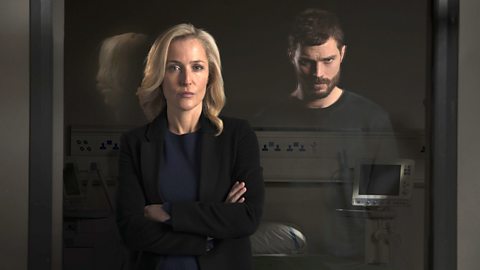
Ruth Penfold-Mounce is speaking on a new Radio 4 programme on thursday 6th October at 11.30am. The programme entitled 'Bodycount Rising' is exploring the rise in female dead bodies displayed on television. Ruth discusses the rise in violence against dead women and challenges the assumption that this is acceptable entertainment. You can catch the programme on iplayer from friday: http://www.bbc.co.uk/programmes/p02pc9qx

The Fall

Friday, 23 September 2016

Ending up in Death Research

Ruth Penfold-Mounce has been published on the up and coming blog Women are Boring. This blog and twitter account is run by Catherine Connolly and Grace McDermott both PhD students at Dublin City University. They seek to disseminate interesting research done by women and to challenge dismissal of women on multiple fronts.

Ruth has written about how she ended up in death research despite being a criminologist in a sociology department. Have a read of Death and Me to see how doing death and crime research led to her meeting the Hairy Bikers.

womenareboring

Thursday, 25 August 2016

New Member of Sociology Staff - Tim Huijts

Welcome to Tim Huijts who has joined the Sociology Department as Senior Lecturer. Tim has studied and worked in the Netherlands and also in Oxford before arriving in York this August.
null

Tim has research interest in socioeconomic inequalities in health, political regimes, gender equity and depression and ethinic diversity. He is also a member of the Executive Committee of the European Society of Health and Medical Sociology.


Tuesday, 14 June 2016

Postdoctoral Fellow Appointed in Sociology

IMG_0016The Department of Sociology is delighted to announce that Dr Rachel O'Neill has accepted the 2 year position of Postdoctoral Fellow in Sociology.  Rachel holds a PhD in Gender and Cultural Studies from Kings College, London and has a particular interest in developing research in the area of food and lifestyle. 


Rachel will start in the Department at the end of August.
 

Tuesday, 15 March 2016

2 year Postdoc in Department of Sociology

Image result for postdocThere is a 2-year postdoc post available in the Sociology Department that is being advertised HERE

The closing date is April 12th. 

Please note this is not a post to work with an individual member of staff, but to devise a program of work associated with one or more of our research clusters. 

Informal enquires can be made to Dave Beer (chair of the appointment panel): david.beer@york.ac.uk

Thursday, 29 October 2015

Gender and South Korea

A seminar is being run by the Sociology Departments Gender, Sexuality and Inequalities Research Cluster in association with the Centre for Women's Studies and the Asian Research Network. 
Professor Chang Kyung-Sup from Seoul National University, South Korea will be presenting on:

‘Another Gender Perspective on South Korean’s Industrial Miracle: The Material Contradictions of Proletarian Patriarchy’.
Time: Tuesday 17th November 5:00-6:30

Venue: Berrick Saul Treehouse

Thursday, 18 June 2015

Doing Research on Gender and Farming

Part of coming an undergraduate degree in the Sociology department involves conducting a 10,000 word dissertation in the final year.

Third year Bethany Robertson who has just started her own sociology blog - Snippets of a Smiling Sociologist - reflects on her research and what she has learnt:

My topic of 'Gender in the Field of Farming' seems quite wacky to most but was a natural choice for me given that I have grown up on a farm, exposed to the social issues and witnessed the increase in women in farming. I have always questioned what it means to be a farmer since the nursery rhyme ‘Old Macdonald Had a Farm’ struck me as stereotypical for seeing women as inferior in farming. My advice for anyone deciding on a topic is that working with a personal interest or thinking outside of module work to research something you are passionate about, will give you the motivation to succeed and jump through the barriers you will inevitably face along the way!

I was supervised by Ellen Annandale, and expored the role of women in farming which has traditionally been understated in academic literature due to the predominance of men numerically and normatively in farming. Therefore, sociological research in the area has focused on farm wives and their role on farm, failing to acknowledge the increasing number of women farming in their own right, challenging the image that farming is unsuitable for women.

I conducted interviews with eight women in farming across Norfolk to determine whether women feel gender is made relevant in their work, in order to assess how far experiences and the way gender is ‘done’ reflect inequality between the sexes. Drawing on thematic analysis, my dissertation suggested that women accentuate their femininity to construct difference and position themselves as viable farmers. Instances of marginalisation were tolerated but such gender performance does little to challenge the gendered culture of farming and may contribute to maintaining an environment which undervalues women. 

I enjoyed my research and was so inspired that I was keen to engage other students and staff  with my work. Consequently I took part in the inaugural student-led lectures a couple of weeks ago as a personal challenge to increase my confidence and to share my passion for gender equality in the context of farming. This proved to be a great opportunity to attempt to curb my fear of public speaking because it felt like I was the expert in the room, as well as allowing me to gain feedback on my work and presenting style in an informal way.


I have learnt a lot about project management in organising my primary research which I can take on board in the future. This is going to be particularly useful as I am staying on within the department to embark on the Masters in Social Research to continue to develop my methodological skills which I can culminate in a project, less constrained than my undergraduate dissertation in terms of doing justice to the practical application of research methods. Perhaps I may like to adapt and broaden the scope of my current project in light of honing and reviewing my approach. Post-Masters I am keen to fulfil my passion for contributing to social understanding via empirical research and analysis in the context of a charity or research organization.

Friday, 17 October 2014

Clare Jackson reflects on: Is pursuing an academic career worth it?

Over the next few weeks the blog is going to run a series of 'Meet the Staff of the Sociology Department' posts. In this first post Clare Jackson reflects on her the trials and tribulations of pursuing a career in academia as a mature student:

'So what should you do when you are the mother of four children aged sixteen to one, have a full-time job and up against the challenges of mid-life?  Do a PhD.  Of course!  Then, two years in to the part-time doctorate, decide that you love it so much that you’re going to throw in your nice secure full-time job, sell your house, move your family across the country and take up temporary work to pay the bills.  Insane?  Probably.  Worth it?  Definitely!

Displaying IMG_0173.jpg
So it was that in 2005 I came to the Department of Sociology at York to start a part-time PhD using Conversation Analysis to study how gender is made relevant in talk.  In 2007, I moved from Carlisle to York, embracing a very uncertain future of temporary contracts as a Teaching Fellow in the department.   Another four years of study followed as well as a number of anxious summers when I wondered whether my contract would be renewed.  It was.  In 2012 I got to wear the silly floppy graduate hat of doctor-ness and earned the right to use a non-gendered form of address; Dr. Jackson.  In 2013, I was appointed lecturer in Sociology, and now have four children, a full-time job, and am still facing challenges of (late) mid-life… and I have a crazy, wonderful dog named Alfie.  I still do not earn what I did in 2007 when I gave up that nice, secure job.  But, I’ve been on an amazing journey and have inspired my four brilliant daughters to believe that anything is possible, and that achievement is not only for the young. 

The rewards of being Dr someone are many.  I got to completely terrify my new GP, who had assumed I was a medic of some kind.  I’ve never been treated with such respect in a medical encounter!  I did confess… eventually. I get to teach subjects I am passionate about, especially Conversation Analysis.  For the uninitiated, this involves listening to conversations, transcribing them in great detail and analysing them, searching for regularities so that we can describe how talk is organised in a way that permits us to make sense to each other.  It’s amazing!  The sheer orderliness of interaction is a beautiful thing.

I also get to research topics I am passionate about.  My current research focusses on decision-making that gets done in talk between healthcare professionals, women and their birth-partners in the labour ward.  We know that labouring women often want to be involved in decisions about how they give birth but that this does not consistently happen.  My research team are intending to record and analyse the interactions that take place during labour in order to describe how decisions are initiated, who initiates them and how they are responded to.  In preparation for making a bid for funding, we have been working on the data available from the Channel 4 programme, ‘One Born Every Minute’.  A clear finding from this (admittedly small and heavily edited) dataset, is that one way in which decisions are initiated by Healthcare professionals is through use of the phrase ‘we need to ….’.  In a sense, this formulation closes down the opportunity for women to decline whatever is being asserted as a ‘need’.  However, women can and do resist.

Oh, and I also get to do lots and lots of admin.  I am leader of the pathway for Sociology with Social Psychology, Chair of Mitigating Circumstances Committee and the departmental Exams officer.  This means that I am involved with almost all aspects of students’ progress from admission to graduation.  I am new to the exam role, and have quickly discovered that it’s not going to put me at the top of any popularity poll; I seem only to write demanding emails to colleagues stressing the urgency of some very tight deadline.  This means, many of emails begin with ‘we need to…’.  My colleagues can and do resist… for a while.'


Wednesday, 14 May 2014

Gender and Sexuality Research Symposium: Masculinities, Modernity and Heteronormativity in the UK and South China

Tuesday 10 June 2014, 10.00AM to 18:00

Location

Bowland Auditorium, Berrick Saul Building, Heslington West, University of York

Speakers

  • Stevi Jackson, University of York --- Gender, Families and Modernity in Comparative Perspective: Theoretical and Methodological Issues 
  • Jieyu Liu, SOAS University of London --- Changing Family Relations in Urban China 
  • Travis Kong, University of Hong Kong --- On the Edge: Chinese Men Negotiating Thrill and Control in Commercial Sex - 
  • Sik Ying (Petula) Ho, University of Hong Kong --- The worst thing a man can do? Hong Kong Chinese Men's perceptions of bad behaviour in intimate relationships 
  • Xiaodong (Wes) Lin, University of York --- ‘Filial son’, the Family and Identity Formation among Male Migrant Workers in Urban China 
  • Hongwei Bao, University of Nottingham --- Becoming Gay: Negotiating Sexuality in Urban China 
  • Denise Tse-Shang Tang, University of Hong Kong --- Perspectives of Same-Sex Sexualities and Self-Harm Among Service Providers and Teachers in Hong Kong 
  • Sik Ying (Petula) Ho and Denise Tse-Shang Tang, University of Hong Kong --- A critique of the Minority Stress Model: Prejudice, Social Stress, and Self-Assessment among Sexual Minority People in Hong Kong 
  • Paul Johnson, University of York --- Homosexuality, Heteronormativity and Human Rights: Europe and Beyond 
  • Howard Chiang, University of Warwick --- In the Shadow of Empires: Imperial Citationality and the Queering of Marriage in Sinophone Communities 

Booking

Places are limited, please book your place at https://www.eventbrite.co.uk/e/gender-and-sexuality-research-symposium-masculinities-modernity-and-heteronormativity-in-the-uk-and-tickets-11616058945


Thursday, 27 March 2014

Contesting ‘sex’ and ‘gender’ difference in emotions through music use in the UK

A new article, written by Dr. Sam de Boise, published in the Journal of Gender Studies, looks at claims which have emphasised gender and sex differences in emotions. Such disparities in experience have often been explained with reference to either biological differences or socialisation into discrete 'gender roles'. 

Analysing quantitative and qualitative survey data about personal experiences of music from 914 respondents (male = 361; female =553), it outlines the particular problems associated with both ‘hardwired’ and ‘socialisation’ accounts.

 In looking at music listening, which is often so explicitly concerned with emotional experience, the article demonstrates how context, age and experience intersect with gender to produce a much more complex picture of emotions than most accounts which treat gender as static or singular.

http://www.tandfonline.com/doi/full/10.1080/09589236.2014.894475#.UzLV7s4ZqkM

Wednesday, 5 March 2014

Xiaodong Lin shortlisted for BSA Philip Abrams Memorial Prize


Dr Xiaodong Lin’s monograph, entitled ‘Gender, Modernity and Male Migrant Workers in China: Becoming a "modern" man’, is among the five finalist titles for this year’s BSA Philip Abrams Memorial Prize.http://www.routledge.com/books/details/9780415626576/

Friday, 7 February 2014

Dr Xiaodong Lin's New Book: Gender, Modernity and Male Migrant Workers in China: Becoming a 'Modern' Man

Examining Chinese male migrant workers’ identity formation, this book explores their experience of rural-urban migration and their status as an emerging sector of a dislocated urban working class. It seeks to understand issues of gender and class through the rural migrant men’s narratives within the context of China’s modernization, and provides an in-depth analysis of how these men make sense of their new lives in the rapidly modernizing, post-Mao China with its emphasis on progress and development. Further, this book uses the men’s own narratives to challenge the elite assumption that rural men’s low status is a result of their failure to adopt a modern urban identity and lifestyle. Drawing on interviews with 28 male rural migrants, Xiaodong Lin unpacks the gender politics of Chinese men and masculinities, and in turn contributes to a greater understanding of global masculinities in an international context.

Link to amazon: http://www.amazon.co.uk/Gender-Modernity-Migrant-Workers-China/dp/0415626579

Narratives of Hope: Science, Theology and Environmental Public Policy (SATSU)

Date and time: Wednesday 10 April 2019, 1pm to 2pm Location: W/306, Wentworth College, Campus West, University of York ( Map ) Audie...