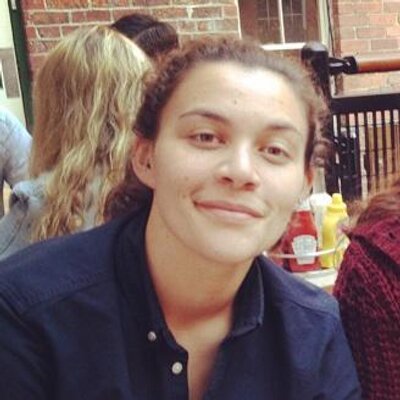
Many congratulations to Ros Williams for being awarded her doctorate.
Ros completed her thesis under the guidence of Nik Brown and funded by the White Rose Doctoral Training Centre (DTC) and based in the Science and Technology Unit (SATSU) within the Sociology Department.
Ros's research was part of the 'Rethinking the social production, locus and impact of bioscience' network focusing on the social, political and economic dimensions of the biotechnology industries with an emphasis on umbilical cord blood banking.
Showing posts with label Ros Williams. Show all posts
Wednesday, 16 December 2015
Tuesday, 21 April 2015
Ros Williams and Regulating Time Workshop
In amongst papers about indigenous epistemologies of ownership in the US's electronic mortgage registration system (MERS), the importance of Greenwich Mean Time in the British imperial project of maritime sovereignty and modernity, I was asked to talk about issues arising from my own thesis.
My paper explored how the public umbilical cord blood bank contends with the regularly updated professional standards intended to regulate the clinicians who use the collected tissue. The collection managers must anticipate future clinical need, typing and diagnosing tissue beyond current clinical expectations, and regularly appraising older stock. This anticipatory logic, as I call it in the paper, demonstrates the temporal rhythm of a repository of tissues collected in the past, maintained in the present, and of potential use in the future.
See more info here: http://www.kent.ac.uk/
Wednesday, 13 August 2014
International Sociological Association Congress 2014

Written by Ros Williams and Alex Simpson
In July the International Sociological Association (ISA) held its 2014 Congress in the port city of Yokohama, Japan. For one week the city hosted 6,087 sociologists who came from all of over the world to contribute to this global, quadrennial sociological event. As two PhD students who had been given the opportunity by the Department of Sociology to attend, it was hard to comprehend the sheer scale of the conference. Organised into ‘research committees’ which further divide into small panels on specific themes, the innumerable papers and sessions demonstrated the span of research being undertaken by sociologists from across the globe today.

One hundred and four countries were represented and, because of this, there was incredible international scope. Examples from the Health and Clinical Sociology research committee included papers on the recent emergence of Clinical Sociology in Iran, to the governance of Thailand’s public health system. Within the Institutional Ethnography research committee, presentations explored the various uses of ethnography to explore institutional contexts within Chile, Canada, France and the United Nations. Papers also demonstrated wide methodological variety, including the use of visual sociology to better understand the embodied experience of disability as well as how ethnography can be used to understand the nuanced contexts of rural life. This incredibly wide tapestry of research meant there were innumerate opportunities to attend papers that either directly spoke to our own research or, equally valuable, to simply follow our interests as sociologists.
On the Saturday of the conference we both had to opportunity to present from two papers from our own, ongoing doctoral research projects. Ros’ paper on collaborative governance in provision of regenerative medicine was part of a panel organised by the Sociology of Health Research Committee. As a ‘distributed paper’, a written piece was produced to circulate and present. Along with this style of paper, there were various different presentation approaches, including traditional papers and round table sessions with groups of shorter papers. Alongside this, Alex’s paper explored how ethnography can be used to better understand the normative and cultural assumptions of market life within the City of London. As part of the ‘Institutional Ethnography’ research committee, this oral presentation was able to pool together some of the themes emerging from a preliminary data analysis and to gain invaluable feedback from others engaging in a similar field.
Presenting our
PhD work at a conference of this size was a thoroughly worthwhile experience.
Both papers were well received and new contacts made which will hopefully lead
to the opening of further opportunities and outlets for our work. Beyond our
presentations, attending the ISA gave us both the crucial professional
opportunity to meet other sociologists working both within and outside our
areas of research. Overall it was a hugely enjoyable and worthwhile experience
and our deepest thanks go to the Department whose funding and support made all
of this possible.
Subscribe to:
Posts (Atom)
Narratives of Hope: Science, Theology and Environmental Public Policy (SATSU)
Date and time: Wednesday 10 April 2019, 1pm to 2pm Location: W/306, Wentworth College, Campus West, University of York ( Map ) Audie...
-
Tuesday 26 June 2018 09:00-17:00pm Speaker: Professor Karen Throsby - Unviersity of Leeds, Professor Nick Crossley - University of Manche...
-
Date and time: Wednesday 10 April 2019, 1pm to 2pm Location: W/306, Wentworth College, Campus West, University of York ( Map ) Audie...
-
Dr Frances Thirlway April in the Department sees the inaugural event of the Carnivals, Pageants & Street Parades Research Network , f...


