Showing posts with label academic career. Show all posts

Tuesday, 3 May 2016

Media Impact and the Hairy Bikers


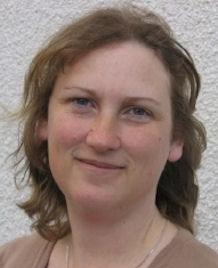
Ruth Penfold-Mounce
Academics are increasingly called to have 'impact' and to be public intellectuals outside of the ivory towers of universities. This often calls for working outside of the comfort zone of many academic researchers - talking to and appearing in the media. Ruth Penfold-Mounce, Lecturer in Criminology reflects on her experience of filming with the BBC:


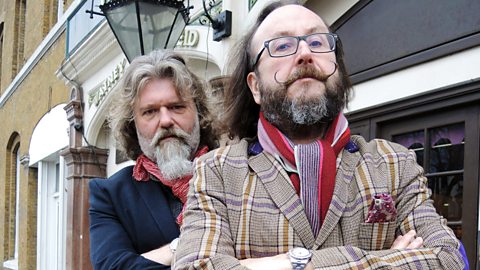
'Last year in March I received an email from the BBC who wanted to ask some questions about the book I'd written Celebrity Culture and Crime in which I had done a case study of the East End of London 1960s gangster twins, the Krays. Phone conversations followed emails and before I knew it I had been asked to be an 'expert' on the Krays and to walk the Hairy Bikers through a murder scene in The Blind Beggar pub in London. It was an offer I couldn't refuse despite being horribly nervous at the thought of appearing on national television.
The Hairy Bikers' Pubs That Built Britain
The Hairy Bikers
On Friday 29th April 2016 the episode for which I had filmed was shown. Admittedly I was nervous as to how I would come across but after watching it I feel really proud to have done it. Getting out of my comfort zone and appearing on television was a fabulous opportunity to share my passion for celebrity and criminality. I am also glad that I thought in advance about how to make this opportunity into something more than just dissemination of knowledge. I made sure that I got to have a say on the voice over content and I have kept the emails as evidence of my 'impact'.

For fellow academics thinking about how to make the most of media opportunities and to turn it in to impact I would encourage you to consider keeping evidence of how you contributed. Are their suggestions you made that led to a change in emphasis or direction of the debate? If there were phone conversations make sure you send a follow up email confirming what you have suggested - keep the paper trail. We are now (somewhat sadly) in a time where it is vital to think tactically in order to maximize your impact.'

Tuesday, 21 October 2014

Top tips on academic writing

Clare Jackson is displaying her talents again as a natural born blogger but giving insight into academic writing. Definately insightful for undergraduates, postgraduates and academics everywhere:

Write as I say, not as I do

Soon, if they haven’t already, students everywhere will be facing the blank page, aiming to express knowledge, understanding and critique in x number of thousand words.  For some, words will flow easily, for others words will remain elusive, and they will freeze under the tyranny of blankness.  Then there are those, like me, who will write and delete in equal measure, stuck in a spiral of perfection and frustration, getting no-where.
Displaying IMG_0173.jpg 
Writing is central to academic life.  For students, it is the principal method of assessment.  For academics, it is the lifeblood of a career.   For both, the outcome of the effort is scrutinized and evaluated, held up as evidence of intellectual (un)acceptability and (in)validity.  It’s scary!

I find writing difficult, effortful and exhausting.  I write slowly and I use the delete key as often as any vowel or consonant.  I know my bad habits.  These include hours of procrastination, in which there is much tidying of desks, searching of the net for inspiration and lots and lots of coffee.   I write linearly, from beginning to end, trying to perfect each paragraph as I go in a futile attempt to circumvent the dreaded editing.   This means I often get stuck in paragraphs for hours, unable to move on until I’m satisfied that what I’ve written. I write with a loose plan but the reality is that the plan emerges from my efforts to write.  I refuse to start writing unless I have several hours to dedicate to it.  Bad, bad, bad.  Well, not bad, but not good either.  I know my writing habits sufficiently to be able to manage them.  I allow weeks to write a few thousand words, and I would never ever begin to write within hours of a deadline.  Still, what I really need to do is change my habits, not merely make adjustments for them. 

Intellectually, I know what good writing habits are:
·         Plan your time
o   As obvious as it sounds, panning your time is crucial.  A last minute hurried attempt will produce at best a first draft and it will show!
o   By planning your time, I mean actually scheduling it into your diary.  Do not leave blanks in your diary where you plan to be working towards, or actually writing.  Put it in and stick to it.
o   If you have only an hour on a particular day, use it.  Do not wait for the vast expanse of ‘free’ time to begin writing.
·         Plan your writing
o   You will overcome the blank page if you know what you are going to write.
o   Make a detailed plan that sketches out the entire content.  Planning often starts with diagrams or lists.  Play with them until you have a coherent ordering of ideas and a sensible structure.  Then, when you open the blank page, copy and paste your plan onto it. 
o   A good plan will support you actually beginning to write at any point in the essay.  You do not have to start at the beginning and work to the end.  If you are stuck in one section, start writing the next.
·         Be flexible
o   Ideas will occur to you as you write and this is one of the pay-offs of the creative effort in writing.  Adapt your plan as you go.
·         Embrace editing
o   Never submit a first draft.  Most writers go through several drafts before showing something publicly.  The editing process is as important as getting the words out in the first place.  It is in the editing that a poorly structured, wordy, descriptive piece can be transformed into great work.  Trusting in the editing process means that you can be freer at the early stages of writing – just get the words out and know that you’ll be coming back to shape the whole thing up.
·         Embrace feedback
o   Writing does not have to be a solitary activity.  There are ample opportunities for feedback along the way.
o   Share your plan with a tutor.  Tutors are not permitted to read drafts but we are allowed to comment on plans.  Many a wayward essay has been put back on track with gentle nudges from people who will read the final version.  Please do use this opportunity.
o   The writing centre can help at any stage of the writing process.  They can help you to organize your ideas or comment on your final draft.  They will not offer advice on content but they will help you to present your arguments and to tighten up your style.
o   You will get feedback once your essay has been marked and submitted.  Read the comments objectively and draw on them to help shape your future writing.

There are other useful pointers.  Have a writing goal for every writing session – numbers of words, complete a section, add citations.   Try not to end a session with a final point.  Instead, begin the next section, so that when you come back you know where you are going.

So, these are the things I wish I’d known thirty years ago, when I was an undergraduate.  I share them with you now, in the hope that you’ll write as I say and not as I do.


Friday, 17 October 2014

Clare Jackson reflects on: Is pursuing an academic career worth it?

Over the next few weeks the blog is going to run a series of 'Meet the Staff of the Sociology Department' posts. In this first post Clare Jackson reflects on her the trials and tribulations of pursuing a career in academia as a mature student:

'So what should you do when you are the mother of four children aged sixteen to one, have a full-time job and up against the challenges of mid-life?  Do a PhD.  Of course!  Then, two years in to the part-time doctorate, decide that you love it so much that you’re going to throw in your nice secure full-time job, sell your house, move your family across the country and take up temporary work to pay the bills.  Insane?  Probably.  Worth it?  Definitely!

Displaying IMG_0173.jpg
So it was that in 2005 I came to the Department of Sociology at York to start a part-time PhD using Conversation Analysis to study how gender is made relevant in talk.  In 2007, I moved from Carlisle to York, embracing a very uncertain future of temporary contracts as a Teaching Fellow in the department.   Another four years of study followed as well as a number of anxious summers when I wondered whether my contract would be renewed.  It was.  In 2012 I got to wear the silly floppy graduate hat of doctor-ness and earned the right to use a non-gendered form of address; Dr. Jackson.  In 2013, I was appointed lecturer in Sociology, and now have four children, a full-time job, and am still facing challenges of (late) mid-life… and I have a crazy, wonderful dog named Alfie.  I still do not earn what I did in 2007 when I gave up that nice, secure job.  But, I’ve been on an amazing journey and have inspired my four brilliant daughters to believe that anything is possible, and that achievement is not only for the young. 

The rewards of being Dr someone are many.  I got to completely terrify my new GP, who had assumed I was a medic of some kind.  I’ve never been treated with such respect in a medical encounter!  I did confess… eventually. I get to teach subjects I am passionate about, especially Conversation Analysis.  For the uninitiated, this involves listening to conversations, transcribing them in great detail and analysing them, searching for regularities so that we can describe how talk is organised in a way that permits us to make sense to each other.  It’s amazing!  The sheer orderliness of interaction is a beautiful thing.

I also get to research topics I am passionate about.  My current research focusses on decision-making that gets done in talk between healthcare professionals, women and their birth-partners in the labour ward.  We know that labouring women often want to be involved in decisions about how they give birth but that this does not consistently happen.  My research team are intending to record and analyse the interactions that take place during labour in order to describe how decisions are initiated, who initiates them and how they are responded to.  In preparation for making a bid for funding, we have been working on the data available from the Channel 4 programme, ‘One Born Every Minute’.  A clear finding from this (admittedly small and heavily edited) dataset, is that one way in which decisions are initiated by Healthcare professionals is through use of the phrase ‘we need to ….’.  In a sense, this formulation closes down the opportunity for women to decline whatever is being asserted as a ‘need’.  However, women can and do resist.

Oh, and I also get to do lots and lots of admin.  I am leader of the pathway for Sociology with Social Psychology, Chair of Mitigating Circumstances Committee and the departmental Exams officer.  This means that I am involved with almost all aspects of students’ progress from admission to graduation.  I am new to the exam role, and have quickly discovered that it’s not going to put me at the top of any popularity poll; I seem only to write demanding emails to colleagues stressing the urgency of some very tight deadline.  This means, many of emails begin with ‘we need to…’.  My colleagues can and do resist… for a while.'


Narratives of Hope: Science, Theology and Environmental Public Policy (SATSU)

Date and time: Wednesday 10 April 2019, 1pm to 2pm Location: W/306, Wentworth College, Campus West, University of York ( Map ) Audie...